Sunday, November 29, 2009

Obama's approval slipping, oh my!

The news headlines shout out that President Obama's approval numbers are at an all-time low, that he hasn't really done anything, and that he's dithering on Afghanistan. So he's not doing a good job as president, right?

I disagree.

Although the Republicans are whining about record deficits, Obama (and Bush before him) did what was needed to avoid a worldwide meltdown that would have lasted much much longer than the current recession. Greater than 10% unemployment doesn't win any president popularity, but with the economy limping back to life, this will change pretty soon.

In short, as this article states, he is in the process of preventing a depression, remaking America's global image, and championing universal health care. Not bad for a first year!

Saturday, November 7, 2009

Investing in an inflating market

In a previous post I predicted that we would not be headed into another Great Depression, that there would be hopes for a recovery, and that the government would sacrifice the dollar to get out of this mess. It's looking like that prediction is coming true.

In another post I predicted that the market was at a bottom. I was a week early, but it was still a pretty decent prediction if I do say so myself.

I also put together a portfolio for this recovery that ended up returning 26.5% from Jan. 9 to today, while the S&P returned 20.3%. Again, not bad.

Will I quit my day job yet and become a Wall Street trader? Not quite yet. But I will make some new predictions.

I predict that with unemployment over 10%, Americans still struggling, and the shock of the financial crisis still on everyone's mind, the Fed will choose inflation over any threat of a recovery. All of the financial rags are predicting a resurgence of the dollar soon, but I predict over the next year a continuing decrease, and at some point the Fed will actually have to raise rates to keep inflation from getting crazy.

What does this mean for investing? Assets like commodities, gold, and energy should do well. Government bond prices should fall. All bonds will be under pressure from rising interest rates. Although Congress is looking at changing the health care industry, I still see this as a good long-term investment, as people are willing to spend more and more for their well-being. I also see a continued rebound in tech stocks and the NASDAQ.

At any rate, this is a good time to rebalance your portfolio. Here is my new BeeDub Index:

High-Yield Bonds (VWEHX): 5%
Intermediate-term Investment Grade Bonds (VFICX): 5%
2X Short Government Bonds (TBT): 5%
Emerging Markets (VEIEX): 5%
Health Care (VGHAX): 10%
S&P 500 Index (VFINX): 10%
NASDAQ 100 (QQQQ): 10%
International Stocks (VGTSX): 20%
US Small-Cap (NAESX): 10%
Gold (GLD): 5%
Energy (VGENX): 5%
Commodities (DBC): 5%
Real Estate (VGSIX): 5%

I'll keep these for the next 9-15 months before rebalancing. Let's see how this plays out!

Tuesday, November 3, 2009

Repudiation of Ayn Rand


This Slate article is the best counter to her philosophies (and what's becoming the philosophy of the far right) that I've seen.

Sunday, November 1, 2009

CitiZombieBank

A little post-Haloween followup. I now get why Citi has jacked up rates to 29.99% on their customers (including me). This New York Times article describes the company as "desparate for capital", and paints the picture clearly:

While Citigroup has written down tens of billions of dollars’ worth of mortgages on its books, there are looming problems in its huge credit card portfolio. Of the company’s $1.2 trillion in credit commitments outstanding in the second quarter, $873 billion were credit card lines. A measure of the bank’s efforts to wrestle that problem to the ground is the interest it charges customers: in October, Citigroup raised interest rates on some credit card holders to 29.99 percent.

Chris Whalen, editor of the Institutional Risk Analyst, calls Citigroup “the queen of the zombie dance,” referring to the group of financial institutions that the government has on life support.

They are hoping that a combination of bank assistance and maximizing revenue and buying time will let them survive,” he said. “When I look at the whole picture, Citigroup is in the process of resolution. I continue to believe the equity is worth zero and that the company will have to go to bondholders for some kind of money to make the bank stable.”

This shows that the government has stabilized the financial system for now, but it's still very fragile. Is a second bailout around the corner?

Thursday, October 22, 2009

Citibank - taking taxpayer money and sticking it to their customers

I got another letter from Citi (one of the government bailed-out banks if you remember) that my credit card terms had changed. I barely read these, but was shocked when I saw that they were jacking up the interest rate to the loan-shark rate of 29.99%.

I called and asked what was up (maybe a missed a payment or two?) and they said no, given the recent economic times, they needed to raise rates on everyone. But they were giving a 10% rebate on the interest you'd pay, and I could reject the terms and close my account if I liked.

You can be sure these terms will be rejected. Citi has taken taxpayer money to bail it out, is borrowing from the government at close to 0%, and in turn is screwing over their customers. I'm not sure the reason for this--it seems counterproductive, but there must be some grand plan they have.

Even though I don't carry a balance as a rule, I always like a credit card or two as a backup "just in case". So, at 29.99%, what would happen if you did carry a balance with Citi?

Let's look at a hypothetical case of a 20-year-old who is getting married and puts $10,000 on his card for his wedding, then lets the balance build at 29.99% (for simplicity, let's forget about minimum payments for now).

* In just two years and 8 months, this would double to $20,126
* In just 10 years, this would grow to over $137,000
* In 17 years, 7 months he would owe over a million dollars.
* Let's say he carried this on to retirement at 65. He now owes $1.3 BILLION dollars.
* And finally, crushed by a mountain of debt at 78, he dies owing $40 billion, more than the entire current revenues of Citi.

That's what 29.99% does, and that's plain ridiculous.

Sunday, August 9, 2009

Kurt Rambis leaving the Lakers

Kurt Rambis has "verbally" signed a deal with the Minnesota Timberwolves for $8 million over 4 years. Sorry to see him go from the Lakers, but he knew that there was no way he'd be head coach as long as Phil Jackson was around. He'll always be a Laker to me...Goofy Rambis with hornrimmed glasses and great defensive skills.

With all the controversy about who the "Superman" moniker belongs to--Shaq or Dwight Howard, did you know that Chick Hearn dubbed Rambis "Superman" way before either of these two? That right...he looked just like Superman...when he was his alter ego Clark Kent.

He was always a scrappy underdog, someone that may not have been as talented as the superstars but one who tried twice as hard...and who can forget the toughness that Rambis exhibited after the Kevin McHale clothesline in the playoffs with the Celtics?


Wednesday, July 29, 2009

50th district fun is back again!

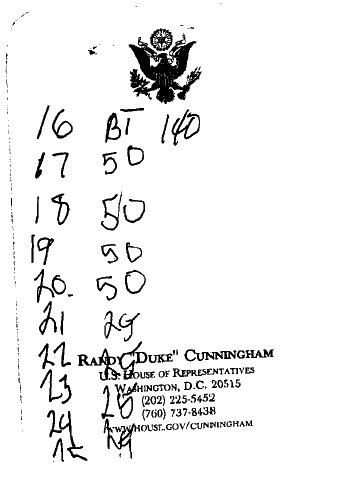
Here in coastal North County San Diego we have the 50th congressional district, which has been crazy ever since late 2005, when then congressman Randy "Duke" Cunningham was exposed for being one of the most corrupt politicians ever, complete with creating his own bribe menu on his congressional stationary, where he would be promise a valuable government contract depending on the size of the bribe.

April 2006 brought a special election to the traditional conservative area, with Democrat Francine Busby performing surprisingly well against a pack of Republicans. The subsequent June runoff pitted Busby against former South San Diego congressman Brian Bilray. The race was neck and neck, but vicous attack ads against Busby combined with her gaffe at a Hispanic rally saying "you don't need papers for voting" pushed him into the lead, and he won by a 5% margin.

Undeterred, Busby ran again against him in the regular November election, but people weren't paying much attention any more and she lost by more than 10%.

In 2008, Bilbray won again, and now for the 2010 election Busby is determined to be the 50th Congressional's William Jennings Bryan, trying a third time against the odds to defeat Bilbray. She has started a series of house parties to raise money and awareness for her campaign, and she recently raised a lot more awareness than she expected.
Busy was at a fundraiser hosted by Shari Barman and her partner Jane Stratton in the Encinitas suburb of Cardiff, at a beatiful house that can be seen here. Surrounding the house are many shrubs and plants, which is where the strangeness started.

From the back patio Busby began addressing the crowd, and a mysterious stranger began shouting, heckling and cussing from behind some bushes, including gay slurs. A bit later, a sherrif's deputy arrived at the door responding to a noise complaint, asking for the owner. She wasn't entirely cooperative, and the deputy was on the nervous side. He ended up grabbing the 60-year old woman, cuffing her, and pepper spraying some of her middle-aged guests. Enter police backup, including a police helicopter (I swear they fly that damn copter over my house every chance they get), and you have quite a party.

The owner spent the night in jail and strangely enough Busby's weak campaign now has some legs, as she got national exposure and lot more campaign cash.

Will it be enough to challenge Bilbray in 2010? I doubt it, but we'll see. I say you should vote for her because her middle name is "Pocino". That's cool.

Friday, July 3, 2009

It's IOU time for California!

Here in California we have Democrat-controlled California legislature that loves to raise taxes and refuses to slash spending. We also have a stubborn Republican minority that refuses to spend a dime on new taxes. In addition, we have a constitution that requires a 2/3 majority to pass the budget. What does this equal? Gridlock! This goes on pretty much every year, even in boom times, and is usually resolved by questionable tactics such as borrowing against future years.
The chickens have come home to roost this year though, and there are no sleight of hand maneuvers with a $26 billion (and growing) shortfall. Now we're running out of money, and have started issuing IOUs until the budget gets worked out...but this could take a while. Meanwhile California's credit rating is threatened to getting cut to junk status.
Years of fiscal mismanagement combined with a recession led to this, and it's looking grim. Think you'd be able to do what it takes to balance the budget? Try for yourself here. First, remember that the Republicans can block any tax increases, so try and just make cuts. Then see if you can add taxes to make it work. It's not easy!
George Will has a good article that argues that the federal government is in danger of heading down California's road, with oppresive taxes, subservience to organized labor, and excessive regulation.

Monday, June 22, 2009

Latest farm trend: Minicows


The 1950's and '60s were boom times, and conventional wisdom said that "bigger is better". Cars got bigger. Houses got bigger. Cows got bigger.

Cows?

Yep, farmers weren't very concerned about the relative consuption of abundant grasslands or cheap feed, and bred cows for more meat per head. Cows actually got bigger during this time.

Oh how times have changed, and even farm animals are starting to change with the times. A new trend, especially on small farms, is the "mini-cow", which is not actually a genetically-modified big cow, but a regular breed that's been here the whole time.

In an LA Times article, they describe the Mini-Herefords, which "consume about half [the feed] of a full-sized cow yet produce 50% to 75% of the rib-eyes and fillets, according to researchers and budget-conscious farmers," he notes. "Farmers who raise mini Jerseys brag how each animal provides 2 to 3 gallons of milk a day." Grass-fed minicows also "reached their mature weight faster, so they could be sold for meat sooner."

They also produce proportionally less methane. Green cows that fight global warming!

Monday, June 1, 2009

Baby: a great dog

We made the tough decision to put down Baby today.  She hasn't been herself lately, with kidney disease and worsening dementia.  She was going to turn 16 in July, so she's lived a nice, long life.  Tough decision though.  So long little girl.


Monday, May 18, 2009

How the Democrats Can Fail: Look to California

California state politics is a giant mess. Thanks to excessive gerrymandering, we have a majority of far-left Democrats running the legislature, battling against far-right Republicans to pass a ballooning budget every year, and consistently mismanaging a populace that would rather have a moderate government more in the center.

The California Democrats are beholden to the unions: teachers, firefighters, prison guards, and many state workers, all of whom demand huge raises, Cadillac benefits, and large pensions. The California teachers union may be the worst of the bunch: teachers are judged nearly entirely on years service and education, not on competency, and it is nearly impossible to fire teacher that has a few years experience. California teachers also get over 1/3 more pay than the national average, but continually want to divert more state money for more pay.

Now state employees and union members are "outraged" that there will be layoffs in their field. Are you serious? We're in the worst recession since the Great Depression! Everyone's getting laid off! This is the sense of entitlement the California special interests now have.

The Wall Street Journal has a great article about the state of California, and how "tax and spend governance may finally hit the wall". California Democrats have been recklessly spending without restraint, leading our state to the brink of bankruptcy. Now there are a lame series of propositions that try to raise taxes into a "rainy day" slush fund, and others that raid other programs that were previously passed by voters for specific purposes.

If the national Democrats want to see how to lose power, look to California. Democratics being puppets of special interests, combined with massive spending with no regard to financial consequences have put our state in critical condition.

Saturday, May 2, 2009

GOP: from the Big Tent to the Pup Tent

With Arlen Spector's defection from Republican to Democrat, the GOP is looking sadder and sadder.  Now after so many years of "with us or against us" mentality and cheap scare tactics to try and keep power, they are starting a "listening tour"--funny that they never bothered listening before they lost power.  I think this party can choose to change and become a serious opposition party again, or continue on their path towards irrelevance, possibly to one day ceasing to exist as their fringe elements take over.  I really hope they can get their act together, because I see a weak Republican party unable to counter a huge shift past the center and far to the left in this country.  Here are five suggestions for the GOP:

1.  Quit playing to the ignorant and lazy.  Fear mongering and cheap shots without substance may get some votes, but weaken the party brand.  Become the anti-Cheneys.
2.  Choose to make your stand on issues that really matter, instead of issues that play to a special interest.  Remember the special session of Congress for Terry Schaivo that ended up accomplishing nothing?
3.  Try to get the majority by leaning closer to the center, not by accumulating enough special interests to win a slim majority.  This worked to get G.W. Bush elected twice, but also increased the country's divide and ended up backfiring.  Also, forcing out the moderating elements of the party will keep you in the minority indefinitely.
4.  Quit blindly choosing religion and law enforcement over individual rights.  This would mean welcoming more libertarian ideas into the party, including gay marriage and medical marijuana.  These are complex issues, and the GOP hardline positions alienate many from the party.  Also, far-right positions on immigration (including wanting to overturn the Fourteenth Amendment) will get you nowhere.
5.  Concentrate on countering the actual bad ideas of the Democratic party.  California is teetering on the brink of bankrupty in part because of many concessions to strong unions (teachers, prison guards) that promote mediocracy, not meritocracy.  Democrats also promote "nanny state" laws, can be against free trade, and many times believe government can do a better job than the private sector.  These ideas need an intelligence counterargument.


Monday, April 27, 2009

Swine flu...

First the mad cows, then the birds, and now the swine. I think the barnyard animals are starting a revolution!

Friday, April 17, 2009

Coachella 2009

Good times! More photos here.

Steve Aoki, Felix da Housecat, Crystal Castles, Leonard Cohen, Morrissey, and Silversun Pickups.

Sunday, April 12, 2009

Happy Easter!

Sunrise at Ponto Beach

Wednesday, March 25, 2009

Everything gonna be all right

There have been many signs recently that we're not going to have a
second Great Depression, with the government and Fed creating unprecedented sums of money to throw at the problem and markets reacting accordingly. We'll get raging inflation, but that's of lesser consequence than keeping people gainfully employed, and something to worry about next year. Welcome back to the 1970s.

So what comes next? Where is our global economy headed after the turnaround? There is a vocal minority that say we're going to briefly peak and then crash permanently, that there is no way that the quality of life can continue increasing, and will in fact decrease as energy and food supplies no longer support the increasing world population and demands. This "deindustrializing economy" or "Malthusian Catastrophe" is a dystopian world that includes a constant state of war, terrorism, extreme weather, and massive poverty. Its followers are getting ready for this by learning farming and back-to-nature survival techniques, preparing themselves for a future of sustinence living.

I have one suggestion for these folks: prepare your children to program a computer, not how to churn butter. You can learn the ways of the Mennonites if you want, but it really isn't necessary.

Here are the most popular doom and gloom theories, all based on the assumption that we've peaked and it's all downhill from here.

Peak Oil
Blogs like Life After the Oil Crash give detailed crash predictions while hawking various kinds of survival gear. Our increasingly-populated world is demanding an exponentially increasing amount of energy, mostly from easy-to-find oil, of which we're running out. The Hubbert Peak Oil Plot shows that the number of proven oil reserves is tapering off, and oil production has nowhere to go but down, which means our quality of life has nowhere to go but down.

Natural Law of Ecosystems (unsustainability)
Similar but more general than Peak Oil, this theory states that we are all part of a global ecosystem, and that economic growth cannot continue expanding without detrimental effects to our planet, which in turn will force a reversal. Compare this to the solution of a Lotka-Volterra equation, which describes the dynamics of biological systems where two species interact in a predator-prey relationship. The predator will increase its population exponentially until the prey's population dwindles. In time, the predator's population will decrease from starvation, yielding an increase in the prey, and continuing a periodic cycle. It can be argued that man is on the first part of this equation, hungrily consuming resources until they peak (which hasn't happened yet, but will soon). Once the party is over, the painful contraction occurs, until the equilibrium of sustainability happen, then the cycle repeats.

Fiat Currency Crash
This one has been predicted for years, and is especially timely now with the global economic meltdown. Our currency and most all world currencies are not tied to any real value (like gold), so governments can play tricks with their currency for short-term gain, like doubling the money supply to escape a severe recession. Fiat currencies are based on a perpetuation of debt and the populace's faith in the system, and once the faith is broken, the demand for the currency falls, and the "value" of the currency falls, sometimes precipitously. The massive printing (or devaluing) of money succeeds in driving overall demand and expansion, but then causes inevitable inflation and economic instability. One website declares that:


EVERY fiat currency since the Romans first began the practice in the first century has ended in devaluation and eventual collapse, of not only the currency, but of the economy that housed the fiat currency as well.

Since we are throwing massive amounts of dollars at our current problems ("creating them out of thin air"), we should be prepared for the beginning of the end of our prosperity.

Why the world as we know it won't end
Yes, there are some huge problems that we need to solve, and we're certainly not out of the woods yet. However, between my faith in human ingenuity and human greed I believe we will continue to solve (or at least mitigate) any problem that comes our way.

Certain trends, like population growth and resource usage, start out like any system where there is a limitless supply of resources and a subsequent exponential increase in population and consumption of the resources. In 1968, Paul R. Ehlrich's The Population Bomb predicted disaster for humanity due to the "population explosion". He made the mistake that many people make about growth trends. At first, there is a small but rising trend, then a steep part of the curve that appears that the trend will continue exponentially without bound. However there are always limiting factors that cause the seemingly limitless growth taper off and flatten out. Typically this trend follows a sigmoid curve. When you are at the -1 point of the x axis in the figure below, it appears that there will be no limit to the growth. Consider fast growing company stocks: eventually market forces or their sheer size cause their growth to limit and flatten.


Notice how 1968 on the population graph looks like -1 on the sigmoid graph. So much for that prediction

The key point to note is that with time things change, people's behaviors change, and trends change. Humans are suprisingly adaptable, and can adjust fairly quickly.

Peak Oil Rebuttal Let's start with Peak Oil. My response to that is...so what? So what if we're depleting our oil? We'll find something else to take its place. It was amazing how fast people's habits changed when gas broke $4/gallon here. The most alpha-male huge SUV drivers were looking to dump them and get a hybrid. Really, it's mostly about economics as argued in The Skeptical Environmentalist (a book I've yet to read, but agree with a lot of the premise).

Recently I was at a party where people were discussing solar panels. We all agreed that since it takes about 10 years for them to pay off, they cost benefit is marginal (the environmental impact is another story, but most people are just driven by the power of the dollar). Imagine if at that same party one of the guys was bragging how he was making $200 per month by powering both his house and his neighbor's houses with his tax-subsidized super-efficient solar panel system and smart grid technology. The herd would flock to alternative energy. Imagine also if we all drove plug-in electric hybrids that tapped this smart energy grid. That would reduce our consumption of oil pretty quickly, wouldn't it?

What about all the other resources we're running out of? Well, is there really a shortage, or has supply just not yet had a chance to catch up with demand? And if there really was a shortage, there will always be efforts into creating methods to work around that shortage.

Unsustainable, or not?
"Well", you may say, "economic progress is based on using our natural resources up exponentially, and between rising population and rising standards of living, we're going to run out soon." I admit that there are some challenges to competitive worldwide demand for limited resources. However, we're far beyond the point where progress and economic expansion is measured by industrial smokestacks. In our information age, the increases in productivity needed for an expanding economy is more how well we organize bits and bytes, and less of how many widgets we can produce. Take information age companies like Google. What does this company really do? It creates a very efficient way to search the internet, and a way to narrowly target advertising. As of today, Google has a market capitilization of over $100 billion, one of the top 100 companies of the world, and although their servers are power hungry, they use a fraction of the earth's resources per dollar than, say, ExxonMobile. We're still expanding our economy by increasing productivity, and need to use fewer and fewer natural resources to do this. The amount of energy that it takes to create a dollar of GDP, called "energy intensity", has been on a downward slope for many years.

I believe that with advancing technology, we'll find out a few to get more and more out of fewer natural resources, and will reach the balance of sustainability.

We've moved from a nation of farmers to a diverse nation of economic and technological leaders, which is why the world trusts our currency even when we print trillions of new dollars from thin air.

The Great Future Currency crash?
And what about our fiat currency? Are we looking at a future when we can no longer print our way out of our mess? When our currency becomes nearly worthless? I don't think we'll ever experience hyperinflation here, although we may be battling some double-digit inflation over the next few years. Although it's not the best situation to be in, we can thank China and Japan helping keep our interest rates so low. Even as we flood the world with Treasuries, they are there to buy them up just as fast, financing our massive debts on the cheap. Think of it as a near-zero-percentage loan for someone who has less-than-stellar credit. Why would they do this, especially given our recent track record? China and the US have a dysfunctional relationship, much like an alcoholic husband and his enabling wife. The US is the breadwinner and (by buying Chinese goods by the boatload, literally), and China depends on the strong health of the US economy to keep their own economic engine running, and will make sacrifices to prop us up when needed. Yes, they could dump all their Treasuries, send our rates skyrocking and put us in economic dire straights, but then not only would our crisis hurt them nearly as bad, but their artifically low currency would rise, making imports that much more unattractive. In an export-dependant economy of theirs, China is just as committed to this pathological relationship as we are. We know it's not right, but neither of us can end it. Even with China's help, eventually we'll have to face up to the fact that we can't have guns, butter, and lower taxes. We'll have to pay more to the government and get less in return. Will we have the discipline and long-term vision to elect leaders that will take us down the path of fiscal discipline? It remains to be seen, but if we don't, I do see more economic instability ahead for us. I admit it does take a bit of faith in my common man to expect a better world in the years to come. The current economic meltdown has shown a light on the worst of man, the greed and laziness of grabbing short-term gains and risking longer-term disaster. But with all our challenges, I see great things in the future in the way of new advances in energy and medicine, and further advancement in the information age that will improve the quality of life for the majority of the planet.

Thanks to my dear dear friend Greg for inspiring me to write this blog post. Although he doesn't subscribe to all of the couterpoints here, his view of the world's future is not nearly as rosy as mine, and he's the guy I'd want as a neighbor if I'm wrong and any of these catastrophes happened.

Sunday, March 15, 2009

Who's paying for our bailout?

Answer: China and Japan, followed by "Caribbean Banking Centers" (read: offshore tax havens) and "Oil Exporters" (read: nations that hate us).

Here is the complete list, as of December.  China now owns over $1 Trillion in US debt.  Don't think they won't have some leverage with that.

The good news?  We're getting a really low-interest loan...but the bill's gotta be paid off someday.  Yes, this is how you mortgage your country's future.

Jim Cramer's "Crashteroids"

A surprisingly playable and funny "Asteroids" clone:
Play Jim Cramer's Crashteroids Game | The Big Money

Monday, March 9, 2009

This stock crash day in history


April 15, 1997...the last time the Dow was at this level.

- Baseball honors Jackie Robinson by retiring #42 for all teams
- The comet Halle-Bopp passes close to the earth, the insipration of the Heaven's Gate
cult in Rancho Santa Fe who were supposedly hitching a ride on the comet to the afterworld.
- Notorious B.I.G.'s posthumous album "Life After Death," sets a record for jumping 175 places to jump to #1 on the Billboard album charts.

Tuesday, March 3, 2009

The End is Near?

My new career as a market forecaster lasted all of one day, as the S&P closed just under 700 today, nearly immediately trashing my prediction. Good thing I kept my day job. Is the end of the crisis here? Have we reached a bottom? Nobody really knows, since even in the Great Depression there were many "signs" that things had turned around, even in the first year of the 1929 crash. So even though Obama declared that now's a good time to buy stocks, we really won't know for a while. The DOW is down over 55% from its highs, second only to the Depression, when it fell 89%.

However, there are those that claim that this is the beginning of the end of the world of we know it, and that we're on a permanent downward pace, with all the inflated money supply, limited resources, and the such. I say that's all bunk and will go into detail in a future post. For those who don't want to wait, here are the key points (loosely borrowed from Wikipedia):
1. Necessity is the mother of invention
2. People are greedy bastards, and if they can get rich by solving the crisis of the day, they will.

Monday, March 2, 2009

The Quaint Depression

It's looking like we're in for some tough times ahead, with the markets crashing and no end in sight to the pain...but I did hear two sure local signs that the bottom is near, if not here right now. First, a family member mentioned that he just sold all his stocks and got out of the market. Then in the gym I overheard another guy mentioning (bragging?) that he's sold out of the market as the TV announcer went on about how we're at levels not seen since 1997.

Now Europe is looking like it could completely melt down, especially Eastern Europe...but I have a sense that the market is near a bottom (even though a true recovery may take years). In fact, I will officially predict that the S&P 500 will not go under 700 in our lifetime (it closed at 700.82 today). Blind optimism? Time will tell...

The future of talk radio

...is not radio, but podcasting. Adam Carolla had a decent morning show with decent ratings, but given this economy his parent company decided to change to a cheaper format (do we really need more Jack FMs?), so they let him go.

Even though he's working on a new TV show, he decided to take the show to his house, inviting guests over while hanging out in his underwear, not worrying about the radio censors, and putting out an even funnier show than the radio one was. And it's all for free and without advertising, since he's still getting paid under his old contract.

Will people keep listening? Well, the podcast's been #1 on iTunes for the first week it was out, with over 1 million listeners. Looks like a runaway hit to me, and don't think for a minute that the media world isn't paying attention to this.

Sunday, February 15, 2009

Monday, February 9, 2009

Lake Tahoe bliss

Snowing like mad here at Squaw Valley!

Sunday, February 1, 2009

Money Changes Everything

I consider myself past the music-video-watching stage of life, but this one is an excellent thought-provoking song and video called "Money" by N.A.S.A., featuring David Byrne and art from street propaganda artist Shepard Fairey (responsible for the cool Obama images). It makes you think about the greed and deception of the last 8+ years and where we are now.

These guys will be at Coachella as part of the awesome Friday lineup.

Thursday, January 29, 2009

Trevor Time


I saw Trevor Hoffman at an Italian restaurant in Encinitas yesterday at the table next to us. He was with his wife and another couple, so I didn't even think about bugging him, but I gotta admit, there's that little a-hole part of me...keep in mind that he's a great person, all-time great baseball player, and all...but still there was a part of me that felt a need to ask him, "Now really, you're 41, pretty soon your fastball will look more like your change-up, your team almost lost 100 games last year, we're going through the worst recession since the Great Depression, millions are out of work, and you TURNED DOWN a $4 MILLION offer from the Padres???? To play in Milwaukee??? What were you thinking???!!!"

I could see the San Diego sports headlines now: "Trevor Hoffman hurts Hall-of-Fame Pitching Arm from Punching Belligerent Fan".

Friday, January 16, 2009

Wednesday, January 7, 2009

Investing in a thrashed market

Depending on what you read, we're either headed for a return of the '30s and another depression, or a return of the '70s with serious stagflation, both of which are terrible for investments. So, given the fact that I have no training at all in the financial sector, I've decided to put together a 2009 portfolio allocation that will (I hope) soundly beat the market. By doing this, it'll (again I hope) prevent me from making dumb, impulsive trades mid-session.

Note that this assumes first that we're not headed for another Great Depression, and that after what will undoubtedly be a tough 2009, there will be some hope of recovery. All signs are that our government will try and print dollars to get us out of this mess, so let's see where that takes us.

For a longer-term horizon with a decent appetite for risk, a general 85% stocks, 15% bonds allocation is good. I'll also throw in some other investments for more diversification. Here's my call for 2009:

It's looking like the market is really betting on deflation for an extended period. Check out the charts below for the 30-year bond yields over time.


Goverment bond yields are at extreme lows, not surprising with a 0% Fed target rate. I see a lot of risk to losing money in goverment bonds (we're pretty much at the end of the line with rate cuts, for one), and am actually looking to short them and put money into investment-grade and junk bonds, which may pay well even with a lot of defaults. It may take all year for this to play out, but I'm betting it will.

Intermediate-term Investment-Grade Bonds: 7.5%
High-Yield Corporate "Junk" Bonds: 7.5%
Ultra-Short Treasury Bonds (TBT): 5% (changes 2X the opposite direction of 30-yr gov't bonds)

Also, I usually stay away from gold as an invesment--it doesn't do anything useful like grow or pay dividends and are taxed as regular income, but in this uncertain environment where the dollar may dive and inflation may rise, it could be a good hedge.
SPDR Gold Shares (GLD): 5%

I still can't stay away from stocks, since you really never know when there will be a recovery, but I will lean heavily towards recession-friendly sectors like Health Care and Consumer Staples.
Vanguard Health Care: 10%
Vanguard Consumer Staples: 10%
Vanguard 500 Index: 10%
Vanguard Total International: 20%
Vanguard Emerging Markets: 5%
Vanguard Small-Cap: 10%

Throw in some Real Estate for more diversification:
Vanguard REIT: 5%

That's my guess for 2009--let's see how it all plays out!

Thursday, January 1, 2009

Happy New Years!

at the labyrinth, stone steps in encinitas